ASCSASCSArab Society for Conflict Studies

About ASCS

Arab Society for Conflict Studies

An academic association of scholars interested in conflict studies in the Arab world.

Who we are

Introducing ASCS

Introducing ASCS

The Arab Society for Conflict Studies (ASCS) is an academic association of scholars interested in conflict studies in the Arab world. It focuses on stimulating scholarly research and producing authentic knowledge related to conflict in the region in terms of its causes, issues, dynamics, available solutions for its management and resolution. This can be achieved by benefiting from available scholarly studies on the phenomenon and the tools and concepts provided by Arab society to deal with it. Thus, the society seeks to contribute to the establishment of “Arab Conflict Studies” research, considering the cultural and historical specificity of Arab society and benefiting from global scholarly production in this field. Researchers come from a background of various disciplines including sociology, political science, international studies, psychology, communication, and others.

Why an Arab society for conflict studies?

The Arab region currently suffers from protracted conflicts whose roots extend back to the era of global colonization and before, where the region was subjected to various forms of colonization that influenced its cultural, social, and political structure. This resulted in distorted national structures that interacted with internal factors within Arab society, leading to multiple national and regional conflicts. Almost no Arab country today is free from conflicts at various levels, some of which manifest in extreme violence, exacerbating fragmentation and weakness in Arab society as a whole. Some of these conflicts have political, societal, and cultural dimensions, taking various forms such as political partnership deficiency, sectarian and tribal divisions, relations with minorities, social gender issues, and many more. Despite the abundance of conflicts in Arab society, there is a severe scarcity in higher education institutions for conflict studies, whether at the level of Arab universities or civil society institutions and NGOs concerned with studying conflicts on scholarly grounds. Conflict has been present in human society since the beginning of social interaction, and there have been scholars throughout history who dedicated their lives to studying conflicts, including the renowned Ibn Khaldun. However, the study of conflict as an academic discipline with its various pillars took a distinct form in the twentieth century.

Today, it is observed that most contributors to the study of conflict as a discipline in the twentieth century came from Western universities and societies. Their educational and cultural training in the field of study, along with the dominance of Western cognitive production in the social sciences in general, led to monopolizing the formulation of theories, concepts, perspectives, and intervention mechanisms. The output has not necessarily taken into considerations not only the cultural specificities and social structures of non-Western societies but also contributed to shaping the foreign policies of Western countries in a way that exacerbated these conflicts in various regions of the world, including the Arab region. Hence, there is a need to produce genuine Arab knowledge that contributes to the accumulation of efforts to establish an Arab science of conflicts

built upon what Arab society provides in terms of tools to deal with conflicts, benefiting from both the local and global intellectual heritage in understanding, managing, and resolving conflicts. Although global cognitive production in this field is abundant and important, any Arab attempt cannot dissociate itself from it, knowledge is cumulative, deriving its inputs from human intellectual production rather than from an independent group by itself. However, the need for a genuine Arab perspective has become imperative to enrich the field based on the requirements of local and regional understanding, developing new and innovative research approaches that contribute to deepening the critical vision of conflicts and finding sustainable solutions to them. ASCS is one of these scholarly forums working towards this direction.

Why ASCS?

01

Understanding the roots of regional conflicts

ASCS explores the historical roots and impacts of regional conflicts, aiming to provide a deeper understanding of their origins and effects on contemporary issues.

02

Addressing the gap in conflict studies

ASCS fills the void in conflict studies within the Arab region by developing research and resources tailored to local contexts and integrating global insights.

03

Arab knowledge production in conflict studies

The science of conflict studies originated mostly in the Western world. ASCS helps produce knowledge that develops the field from an Arab perspective, building on human knowledge production in this field.

What we do

The association's work is diverse across the following areas.
Research

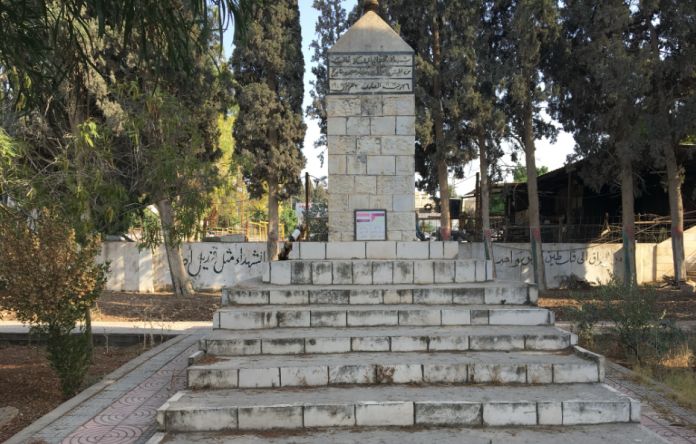
Contributing to authentic Arab research on conflict in Arab society and the solutions available to deal with it, including joint research among members: authoring and editing books, academic articles and research projects.
Education

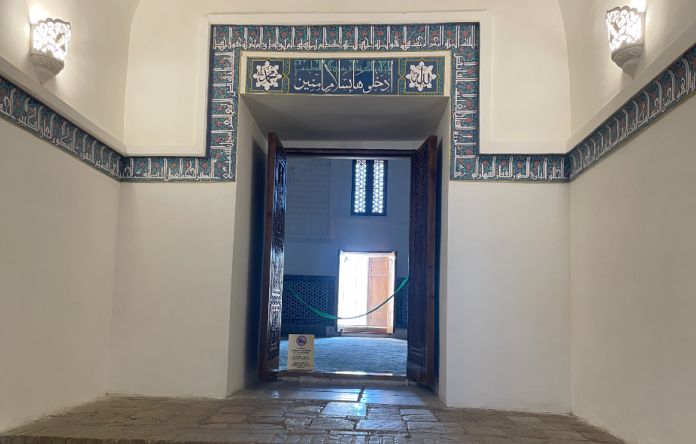
Educational resources on conflict as an academic study within the Arab cultural framework: curriculum materials, workshops and a bank of syllabi that university professors at every level can use to teach conflict management, conflict theory, conflict in the Middle East, armed groups and more.
Activities

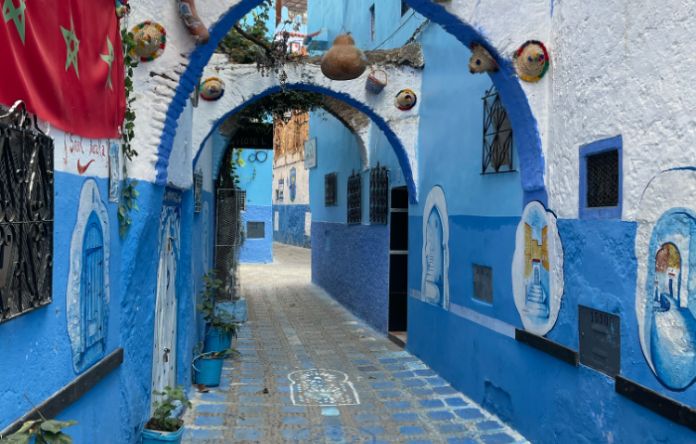
Seminars, conferences and discussions on conflict in Arab society and on political developments related to conflicts in the Arab world.
Our vision

ASCS aims to create an academic environment that contributes to achieving a deeper understanding of the phenomenon of conflict in the Arab world on both societal and political levels within the boundaries of the nation-state and in the relations between Arab states and their relations with other countries. The association seeks to accomplish this through objective, independent, authentic, and constructive research work, as well as educational activities in the field of postgraduate studies, and related events such as conferences and scientific seminars.

The association seeks to attract research and practical expertise from various disciplines in the social and human sciences that possess deep and multidimensional interests in the field of conflict in their various forms, such as civil and international wars, revolutions, and rebellions that resort to violence to achieve their goals, in addition to widespread forms of violence.
Our team

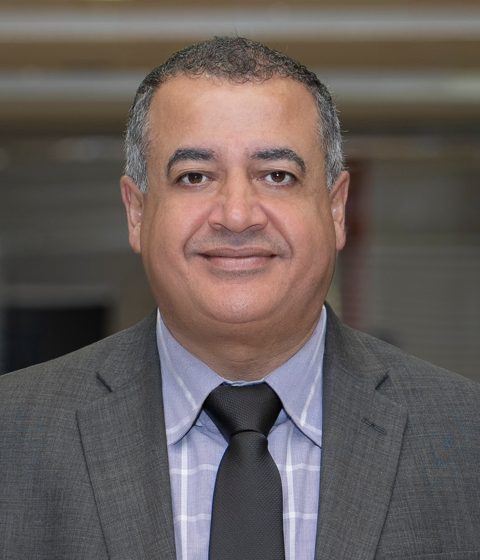
Ibrahim Fraihat

FOUNDING President

Ibrahim Fraihat

Ibrahim Fraihat is an associate professor in international conflict resolution at the Doha Institute for Graduate Studies, a fellow at the Baker Institute for Peace and Conflict Studies at Juniata College, USA, and non-resident fellow at Deakin University’s Middle East Studies Forum in Australia. He previously served as senior foreign policy fellow at the Brookings Institution, and taught conflict resolution at Georgetown University and George Washington University.

FOUNDING President

Ibrahim Fraihat

Ibrahim Fraihat is an associate professor in international conflict resolution at the Doha Institute for Graduate Studies, a fellow at the Baker Institute for Peace and Conflict Studies at Juniata College, USA, and non-resident fellow at Deakin University’s Middle East Studies Forum in Australia. He previously served as senior foreign policy fellow at the Brookings Institution, and taught conflict resolution at Georgetown University and George Washington University. His latest book publications include: Conflict Mediation in the Arab World (Syracuse University Press 2023),

Rebel Governance in the Middle East (Palgrave 2023), Iran and Saudi Arabia: Taming a Chaotic Conflict (Edinburgh University Press, 2020), Unfinished Revolutions: Yemen, Libya, and Tunisia after the Arab Spring (Yale University Press, 2016).
Dr. Fraihat has published extensively on Middle East politics, with articles appearing in The New York Times, Foreign Affairs, Foreign Policy, Huffington Post, Al Jazeera websites, and elsewhere. Fraihat received a doctorate in conflict analysis and resolution from George Mason University in 2006. He is the recipient of George Mason University's Distinguished Alumni Award (2014) for his achievements in the field of conflict resolution.
Subscribe to his YouTube channel for an independent, objective, and constructive analysis on Arab conflicts where he presents a show called “In the Presence of Conflict” at @IbrahimFraihat and Twitter @i_fraihat

Reema Aburamadan

Program Manager

Reema Aburamadan

Reema Aburamadan is an accomplished professional with a strong background in social sciences, particularly in conflict resolution, humanitarian efforts, and international relations. Aburamadan holds two master’s degrees: one in Global Affairs from Bahcesehir University and another in Conflict Management and Humanitarian Action from the Doha Institute for Graduate Studies. She also has a bachelor’s degree in International Relations.

In her professional journey, Aburamadan has demonstrated expertise in office management, interdepartmental coordination, and academic research. Her skills in research and editing academic work have been instrumental in her roles. Her proficiency in research in conflict management and international relations, research, and administrative management further enhance her capability to contribute effectively to any organization she is part of.

International Advisory Board

Ghassan Elkahlout

Ghassan Elkahlout is the Director of the Center for Conflict and Humanitarian Studies and Associate Professor at the MA Program in Conflict Management and Humanitarian Action at the Doha Institute for Graduate Studies. His specialized experience covering three decades of professional work includes the areas of humanitarian response, post-war early recovery, and capacity building. Elkahlout received his PhD in post-war reconstruction and development studies from the University of York in 2001.

Dr. Elkahlout led a distinguished and varied career as a humanitarian professional working for international organizations including the United Nations, the International Federation of Red Crescent Societies, and Islamic Relief Worldwide He has extensive field experience in conflict and disaster-affected contexts including but not limited to Palestine, Iraq, Yemen, Pakistan, Bangladesh, Libya, and Jordan. His research on humanitarian action and post-conflict recovery in conflict-affected context has appeared in prestigious international publications including Housing Studies, Journal of Intervention and State building, International Journal of Disaster Risk Reduction, Journal of Sustainable Development, Disasters, Journal of Peacebuilding and Development. He is the author of Humanitarian Action: Reality and Challenges (2021).

Mohamed Abu Nimer

Mohammed Abu-Nimer, of the International Peace and Conflict Resolution program, is a full professor who has conducted interreligious conflict resolution training and interfaith dialogue workshops in conflict areas around the world, such as in, Egypt, Northern Ireland, the Philippines (Mindanao), Israel, Palestine, Chad, Nigeria, and Sri Lanka. As a professor with over 35 years of teaching experience, he has developed numerous courses that deal with different facets of peacebuilding and conflict resolution and regularly publish on the subject. While his research has focused on a wide array of areas in peacebuilding and conflict resolution,

his most recent areas of focus have included faith-based peacebuilding, interfaith dialogue in peacebuilding and building social cohesion, and pedagogical considerations on incorporating peace and forgiveness education in the Arab world and Muslim world. He also served as a Senior Advisor to the KAICIID Dialogue Centre, an international organization that specialized in interreligious and intercultural dialogue. Abu-Nimer has been both author and an editor many books on faith-based and interfaith peacebuilding (e.g. Nonviolence and Peacebuilding in Islamic Context: Bridging Ideals and Reality (2003); Evaluating Interreligious Peacebuilding (2021); Peace-Building By, Between and Beyond Muslims and Evangelical Christians (2009), as well as interfaith dialogue and its role in peacebuilding and reconciliation (e.g. Unity in Diversity: Interfaith Dialogue in the Middle East (2007). In addition, he has author numerous articles in refereed journals, such as the International Review of Education , the Journal of International and Comparative Education , Journal of Religious Ethics, Peace and Change: A Journal of Peace Research and the International Journal of Politics , Culture and Society' . In addition to his articles and publications, Dr. Abu-Nimer is the co-founder and co-editor of the Journal of Peacebuilding and Development.

Rola El-Husseini

Rola El-Husseini is an associate professor with the department of political science at Lund University, Sweden. She received her PhD from the Ecole des Hautes Etudes en Sciences Sociales in Paris and was a postdoctoral fellow at Yale University before holding several positions at American universities including Texas A&M University, CUNY Graduate Center, and George Washington University. 

Her areas of expertise include Middle Eastern politics, civil wars in MENA, political Islam (especially Shi’ism), and gender and politics. Her first book Pax Syriana: Elite Politics in Post-war Lebanon was published by Syracuse University Press in 2012. She is currently finalizing a book manuscript on women and politics in eight countries since the Arab Uprisings.

Karima Laachir

Karima Laachir is Professor of Cultural Studies of the Middle East and North Africa and Director of Centre for Arab and Islamic Studies (The Middle East and Central Asia) at the Australian National University. Previously, she held tenured positions at SOAS, University of London (2008-2019) and the University of Birmingham (2004-2008). Karima’s research interests and publications focus on the politics of culture in the Arabic speaking world and how cultural productions and practices underpin social and political movements of change.

She has also published on the question of Arab and Muslim Diasporas in Western contexts from the perspective of cultural identity, anti-racist politics, and national belonging. She held Visiting Fellowships at School of Advanced Studies in the Social Sciences (EHESS) in France and at the ANU.

Randa Slim

Randa Slim is the Director of the Conflict Resolution and Track II Dialogues Program at the Middle East Institute and a non-resident fellow at the Johns Hopkins University School of Advanced and International Studies (SAIS) Foreign Policy Institute. Slim is the former vice president of the International Institute for Sustained Dialogue and has been a senior program advisor at the Rockefeller Brothers Fund, a guest scholar at the United States Institute of Peace, a program director at Resolve, Inc, and a program officer at the Kettering Foundation.

A long-term practitioner of Track II dialogue and peace-building processes in the Middle East and Central Asia, she is the author of several studies, book chapters, and articles on conflict management, post-conflict peace-building, and Middle East politics.

Amr Abdulla

Abdalla is the Baker Institute Scholar in Residence at the Department of Peace and Conflict Studies of Juniata College. He is a Professor Emeritus at the United Nations-mandated University for Peace (UPEACE) with main campus in Costa Rica. He is also the Senior Advisor on Conflict Resolution at the Washington-based organization KARAMAH (Muslim Women Lawyers for Human Rights). He obtained a law degree in Egypt in 1977 where he practiced law as a prosecuting attorney.

He then emigrated to the U.S. where he obtained a master’s degree in Sociology and a Ph.D. in Conflict Analysis and Resolution from George Mason University.

Rim Turkmani

Dr. Turkmani is a Research Fellow at the Conflict and Civil Society Research Unit in the Department of International Development at the London School of Economics and Political Science. She directs the Syria conflict research programme at the Unit. Her policy-oriented research work focuses on identity politics, legitimate governance, transforming war economy into peace economy and the relationship between local and external drivers of the conflict. She is a member of the Women's Advisory Board to the UN special envoy to Syria and sits on the advisory board of airwars.org. She directed the project: ‘Crowd-sourcing Conflict and Peace ‘Events' in the Syrian conflict' which produced a detailed database of instances of violence and peace-making. She appears regularly in Arabic and English media commenting on Syria
She is an Astrophysicist by training, previous Dorothy Hodgkin fellow of the Royal Society and writer/curator on the history Islamic science and culture focusing on the impact of the Arabic/Islamic science on the scientific revolution in the 17th century. She curated two international exhibitions on the subject.

Andreas Kreig

Andreas Krieg is a senior lecturer at the School of Security Studies at King’s College London, a fellow at the Royal College of Defence Studies, and the Institute of Middle Eastern Studies. He has spent over a decade living, studying, and working across the MENA region, including Lebanon, Syria, Israel, Palestine, and Qatar. In Qatar, he contributed to a strategic contract between the State of Qatar, the UK Ministry of Defence, and King’s College London. Krieg's research spans various subjects within Security Studies, focusing on the MENA region.

He examines the dynamics between violent non-state actors and state authorities in providing communal resilience. His work on surrogate warfare explores the relationships between state and non-state actors in North Africa and the Levant, while his research on the Arab Spring investigates the link between security provision and socio-politics in the Arab world. From his study of the Gulf Divide emerged his current project on the weaponization of narratives in the Middle East. This project examines how both internal and external narratives have distorted civil-societal discourse and the academic debate on the region's future.

Nikolay Kozhanov

Nikolay Kozhanov is a Research Associate Professor at the Gulf Studies Center (GSC) of Qatar University. He is also a Non-Resident Scholar at the Economics and Energy Program of the Middle East Institute (Washington DC, the US) and a Consulting Fellow at the Russia and Eurasia Programme of Chatham House (London, the UK). Nikolay’s research interests are focused on the geopolitics of the Gulf hydrocarbons, Russian foreign policy in the Middle East as well as Iran’s economy and international relations.

Kozhanov has his PhD in economics from St.Petersburg State University (Russia) and holds an MA degree in Middle Eastern Studies from the University of Exeter (the UK). He has been a visiting fellow at a number of leading international think-tanks including Chatham House and Carnegie Moscow Center. Nikolay was an academic editor of several collective volumes such as GCC Hydrocarbon Economies and COVID: Old Trends New Realities (Singapore: Palgrave Macmillan, 2023) and Russia and the Middle East. (London: Oxford University Press and Hurst, 2022). Nikolay also published two sole authored monographs Russia and the Syrian Conflict: Moscow’s Domestic, Regional and Strategic Interests (Gerlach Press 2016) and Iran’s Strategic Thinking: The Evolution of Iran’s Foreign Policy 1979-2017 (London, Berlin: Gerlach Press, 2018).

Executive Committee

Laila Omar

Dr. Omar Manser is a postdoctoral fellow at the University of Zurich in Switzerland and a former assistant professor of International Relations at Uludag University in Turkey. As a researcher and analyst, he specializes in foreign policy, security affairs, conflict, and peacebuilding, with a focus on Yemen, the Gulf region and Turkey. Dr. Manser holds a Doctorate in International Relations from Uludag University, a master’s degree from the University of Warsaw, and a bachelor’s degree from Sana’a University.

His latest research project explores the trajectories of civil war in Yemen. Dr. Manser frequently contributes to various media platforms as well as think tanks such as the Wilson Center and the Sana'a Center for Strategic Studies, where he provides insights on Yemen and regional affairs.

Raed Aldulaimi

Raed Aldulaimi (Raed Ahmed, previously) is an Assistant Professor of Political Science at Al-Iraqia University, Baghdad. His areas of interest include migration (diaspora, irregular migration, and displacement), rebel governance (in MENA region), and post-conflict reintegration and sectarianism (in the Iraqi context). Raed has published many articles in Arabic and English, and pieces of analysis. His work appeared in many academic journals, such as the Voluntary Sector Review, the Middle East Quarterly, and Journal of Contemporary Iraq & the Arab World.

Recently, Aldulaimi also published a book chapter about rebel groups and tribes in Libya in Rebel Governance in the Middle East. Furthermore, he has conducted fieldwork in the U.S. and Iraq for sole and collaborative research.

Neven Bondokji

Neven Bondokji is a practitioner academic with experience in research and project management in think tanks including the Carnegie Endowment for International Peace and Brookings Doha Centre, with field implementation experience in the development and humanitarian sectors. Neven also supported the Yemeni Peace Process in her role as Program Development Specialist for the integration of Yemeni women in the peace process in 2021-2022.

Her academic research addresses transformation in Islamic movements and radicalization. She has a keen interest in exploring identity transformations among youth in the region. Neven published around 30 policy papers and briefs, two books, and some journal articles. She holds a Doctorate in Peace and Conflict Studies from the University of Sydney, Australia.

Ahmed Labnouj

Ahmed Labnouj is a dedicated and strategic international development and peacebuilding professional with extensive fieldwork experience in complex conflict and post conflict environments. He previously served as the Resident Program Director for Algeria and Libya at the International Republican Institute. Previously, he was the Head of MENA Programs for Interpeace, providing strategic leadership for peacebuilding engagements in Libya and across the MENA region. A certified mediator and former Protection Delegate with the International Committee of the Red Cross.

Labnouj has been deeply involved in Libya since the 2011 revolution. He co-authored a chapter in “The Libyan Revolution and its Aftermath.” His interests include conflict resolution, post-conflict transformation, peacebuilding, democratization, security sector reform, and local governance. Labnouj holds a B.A. from the University of California, Berkeley, an M.A. from Tufts University’s Fletcher School of Law, and Diplomacy, and a Certificate in Public International Law from the Graduate Institute of International and Development Studies in Geneva.

Omar Munassar

Laila Omar is a Fung Global Fellow at the Princeton Institute for International and Regional Studies (PIIRS), Princeton University. She earned her Ph.D. in Sociology from the University of Toronto in 2023. Her research interests lie within the fields of forced displacement, immigrant and refugee integration, gender, family, and qualitative methods. More specifically, she is interested in issues related to the integration process of refugees from/to the Middle East and North Africa (MENA) region.

Her thesis, “Times of Uncertainty and Future Projections for Forced Migrants: The Case of Syrian Refugee Mothers and Youths in Canada,” examines the temporal experiences and future projections of Syrian refugee mothers and teenagers after their resettlement in Canada. Her research has been funded by the Social Sciences and Humanities Research Council of Canada (SSHRC) and appeared in journals such as the Journal of Ethnic and Migration Studies and Journal of Refugee Studies.

Amel Ouchenane

Amel Ouchenane is a Youth, Peace, and Security Specialist at the United Nations Development Program Regional Service Center for Africa, within the Regional Governance and Peace-building Team. In her role, she focuses on providing advisory and program support for the Youth Peace and Security agenda across 46 African countries. She supports UN inter-agency coordination on Youth Peace and Security, builds partnerships, and engages with multiple stakeholders to promote the YPS agenda in Africa.

Additionally, she contributes to the development of knowledge products and capacity-building initiatives for various actors involved in youth, peace, and security. Previously, Amel worked as a Youth Expert for five years within the Department of International Projects at the OIC Youth Forum, an intergovernmental institution affiliated with the OIC. Her expertise encompassed youth policy, program cycle management, youth empowerment, and peacebuilding in the 56 OIC Member States. She also served as a Consultant for the UNESCO Office of Gulf States and Yemen. Amel holds a Ph.D. in International Relations from the University of Algiers, with a special focus on conflict resolution and regional security. She is multilingual, speaking Arabic, French, English, and Turkish

Join our network

Become part of a growing community of scholars and specialists focused on conflict studies in the MENA region. Collaborate on research, contribute to advancing knowledge in the field and engage with experts from diverse disciplines.

Join now
Supported by IT.JO · بدعم من